Alchemy

How I scaled brand, web, and systems at a $10B company that powers 71% of top crypto apps

Web Design

Systems

Brand

alchemy logo on a blue background
Jump to:

Overview

Company: Alchemy is a $10B crypto infrastructure start-up that powers 71% of top crypto apps. Notable customers include: Visa, Stripe, Robinhood, Polymarket, Uniswap, and World.

Industry: Crypto / Infrastructure

Tenure: 3 years

My Role: Lead designer. My role was spread across web, brand, and design systems; at times, I also covered product design for our developer dashboard.

Tools: Webflow, Figma, Dato CMS, Rive, Photoshop

AI Tools: Claude, Midjourney, Flora

Results

  • 10x faster development cycles by creating & scaling our design system

  • 30% faster site load times by migrating to headless CMS

  • Elevated brand presence through strategic design leadership

  • Enabled org-wide self-service for brand assets

  • Improved dev experience & product adoption on Docs

  • Cultivated a collaborative design team culture

Special thanks: This was successful in large part due to the amazing team at Alchemy. While the projects I included reflect my work as an independent contributor, I'm a better designer today because of my design family: Ramiro Cardozo, Julia Dwyer, Adam Lukasik, and Yuxin Wu.

Challenge

When I joined as a contractor in mid-2022, the design team was operating without foundational infrastructure.

Every project was treated as a one-off effort—there was no design system to build from, no centralized brand asset library, and no consistency across channels. Alchemists kept their own brand files on their desktops, creating version control chaos and inconsistency across channels.

Simple tasks like launching a single landing page could take weeks. Social image requests came in frequently and last-minute, forcing the team into a constant reactive mode.

Without shared components or patterns to leverage, designers were rebuilding basic elements from scratch for each project, burning time and creating compounding inconsistency across every touchpoint.

The team needed scalable systems that could support rapid growth; not just make things look better, but fundamentally change how design work got done.

Resolution

In early 2023, I joined full time to build the foundational systems the team needed to scale.

I created a design system from 0→1 that accelerated development cycles 10x, turning weeks-long projects into days-long sprints. To eliminate reactive social requests, I built a custom Figma tool that let marketing generate branded assets instantly without designer support.

I led our website migration from Webflow to a headless CMS, improving load times by 30% and empowering the marketing team to build pages independently.

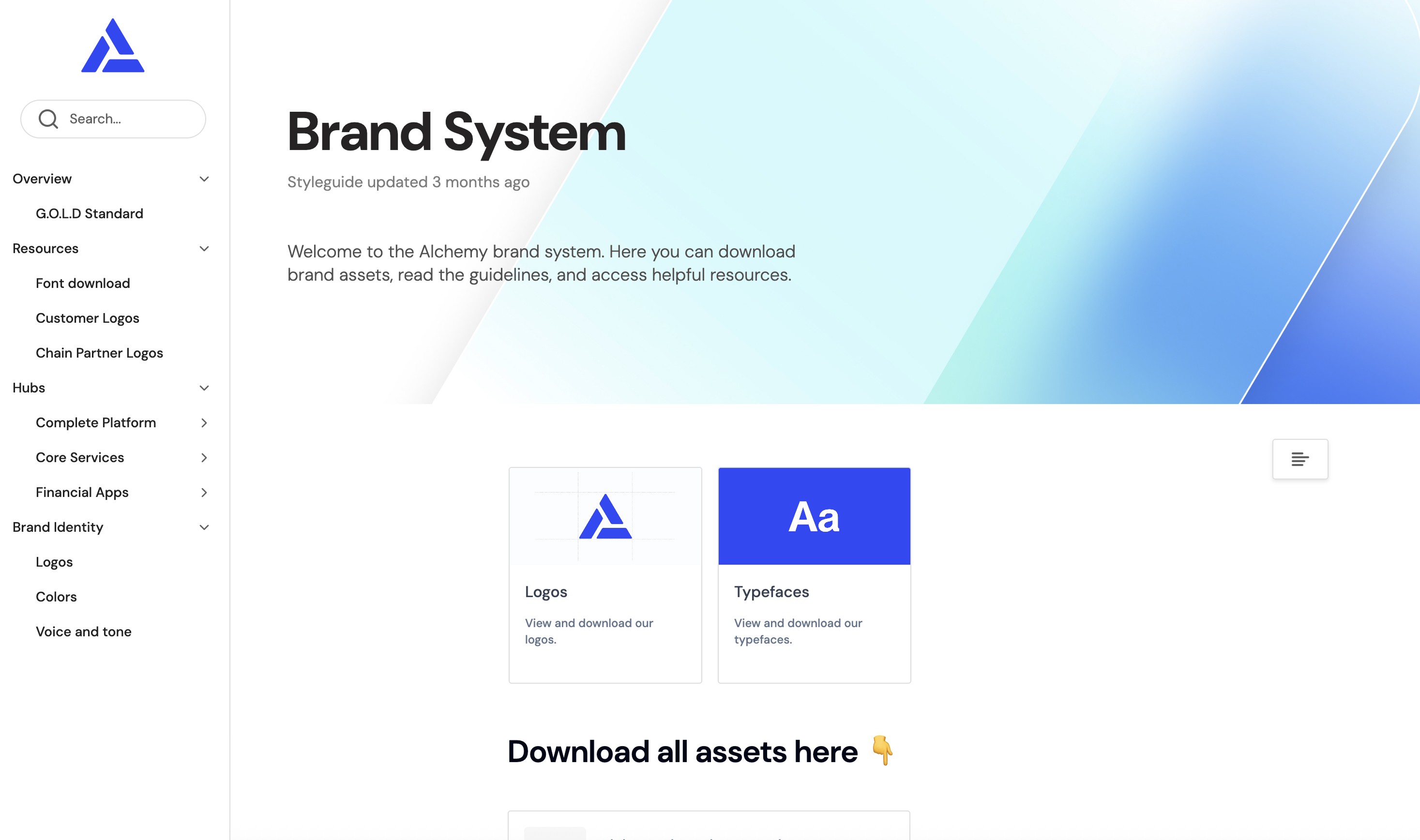
Beyond the technical improvements, I elevated the site's design maturity by introducing thoughtful typography, refined layouts, and a cohesive visual system that better reflected our brand positioning. I also launched design.alchemy.com as our centralized brand hub, synced with Figma and always up to date, ending the era of scattered logo files on desktop folders.

As the company grew, I stepped into strategic design leadership, directing brand across major product launches including Account Kit's full sub-brand creation and launch activation. I rebuilt our documentation site to better serve developers and drive product adoption.

My approach was simple: each design initiative should also aim to improve the team's efficiency.


Design System

I started by building our design system 0 → 1.

This was not something that I was told to do; rather I could see the long-term consequences of not prioritizing one.

I got buy-in by weaving this in-between other smaller projects where I could test it with concentrated groups. Once it was proven to have impact and I had a group of advocates, management and developers were onboard.

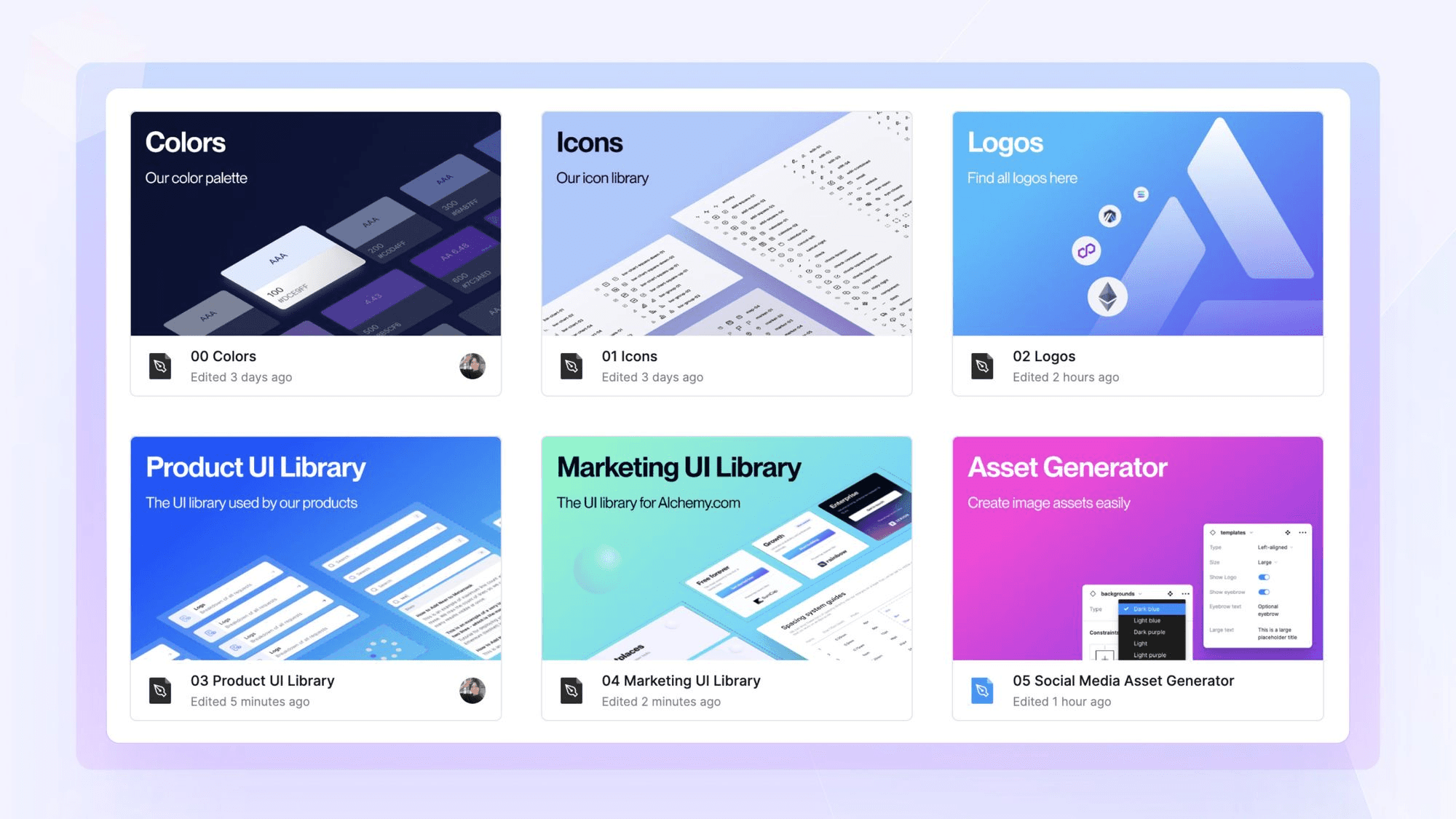
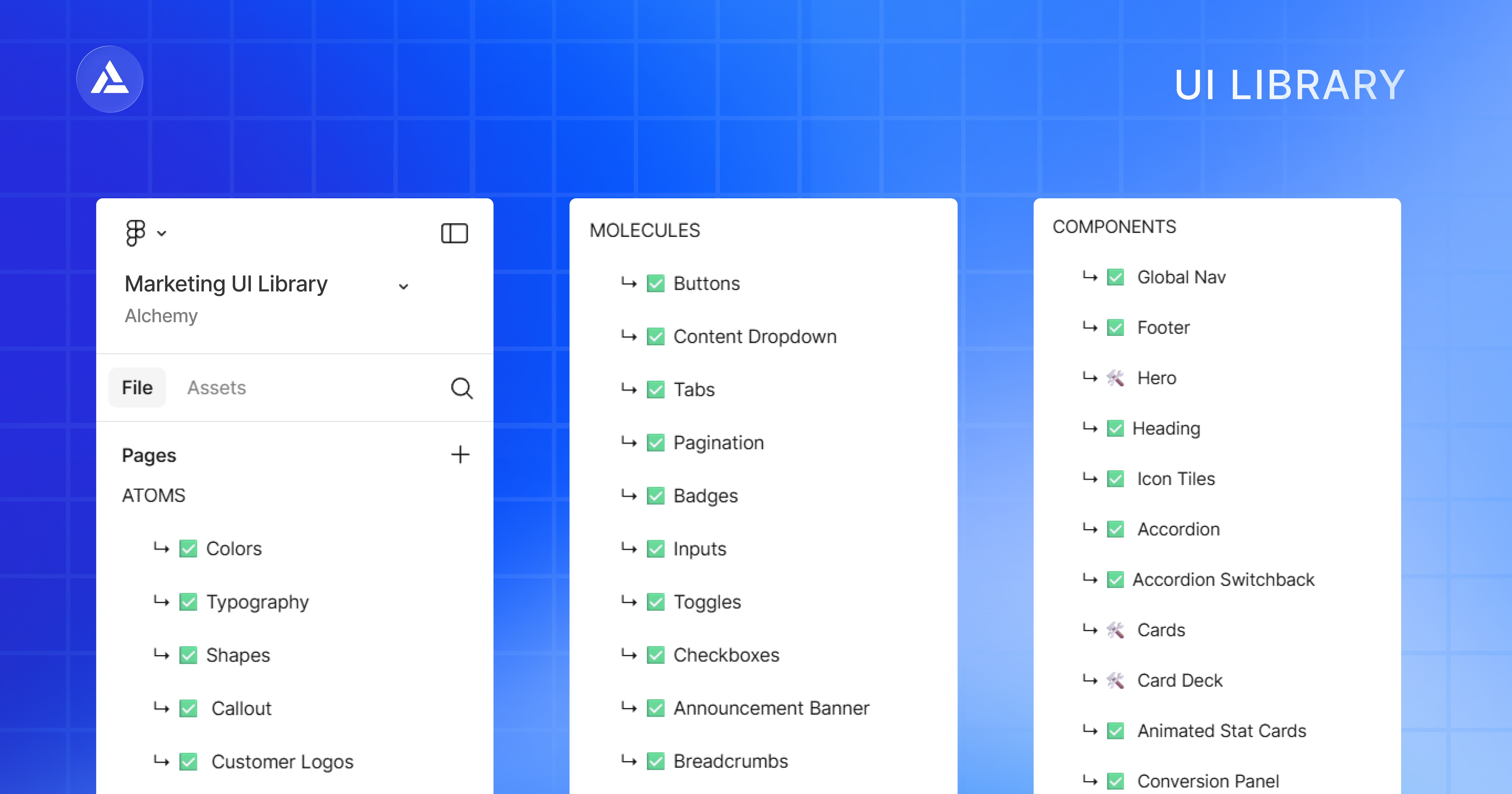
The system in Figma housed:

  • 2 UI libraries (1 for product, 1 for the website)

  • Colors

  • Logos

  • Icons

This allowed assets to be shared and created without creating bottlenecks between marketing and product teams.

Engineering partnership

I worked closely with the frontend team to ensure seamless implementation. We established shared naming conventions between Figma and code (e.g., `button-primary-large` matched across both). I created developer-focused documentation with code snippets, usage guidelines, and implementation notes for each component.

Adoption

Getting the design system adopted required more than just building it. I ran training sessions for designers, engineers, and marketing team members and created Loom videos and documentation that made implementation straightforward for everyone. Within the first quarter, I had all of design, frontend, and a handful of marketers actively using the system.

Technical implementation

I leveraged Figma's advanced features to make the system more powerful and maintainable. I used variables for color tokens and spacing scales, making theme updates instant across all files. Auto-layout patterns were built to flex appropriately across breakpoints. I created component variants that covered edge cases without creating component sprawl.

Impact

In just one quarter, it would go on to turn weeks-long projects into days-long sprints.

By the next quarter, the system was powering 100% of new web pages and 50% of product UI. Designers reported spending much less time on repetitive component work.

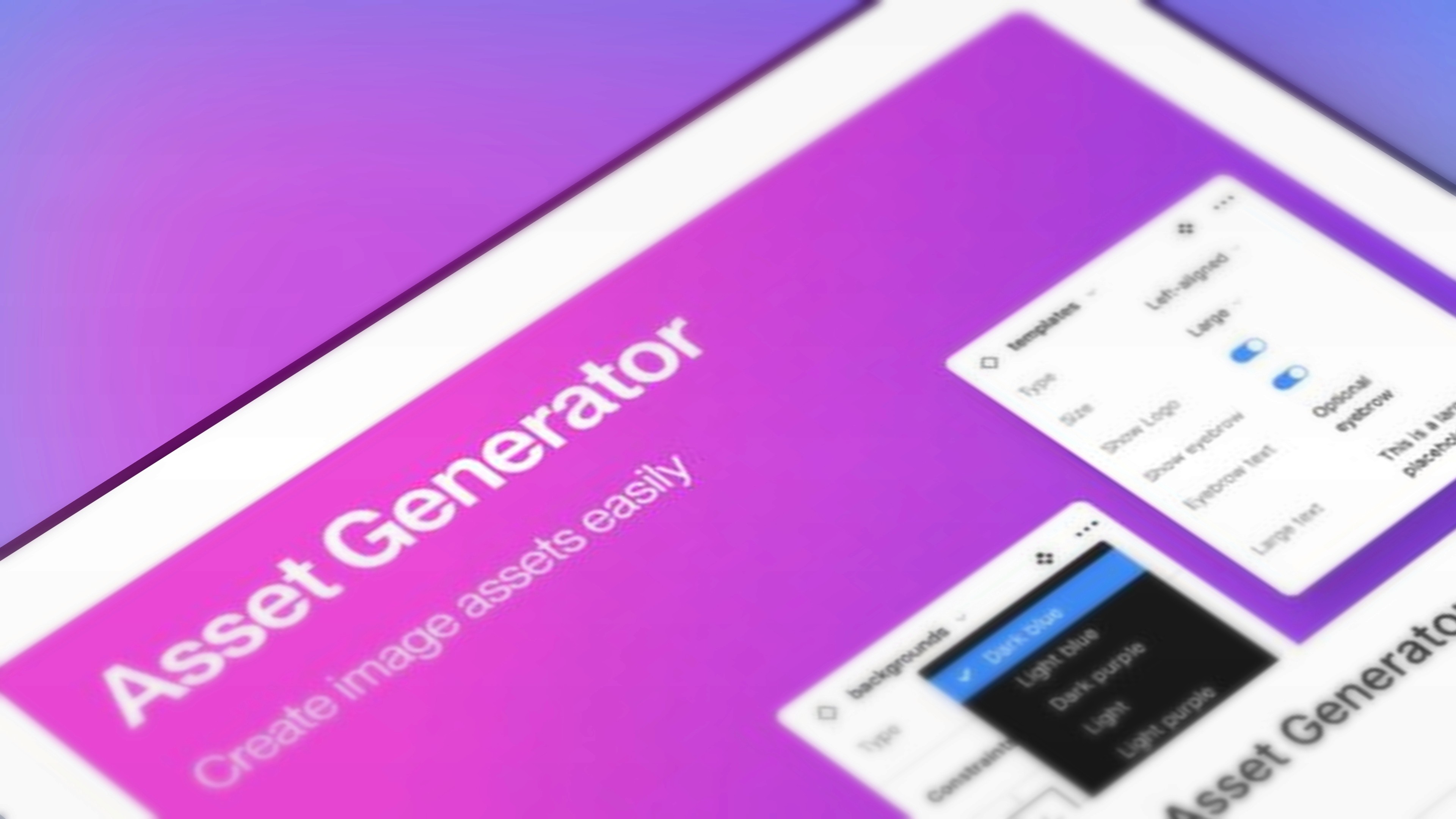
Asset Generator

One big opportunity area was how to solve the bottleneck of never-ending, last-minute social requests.

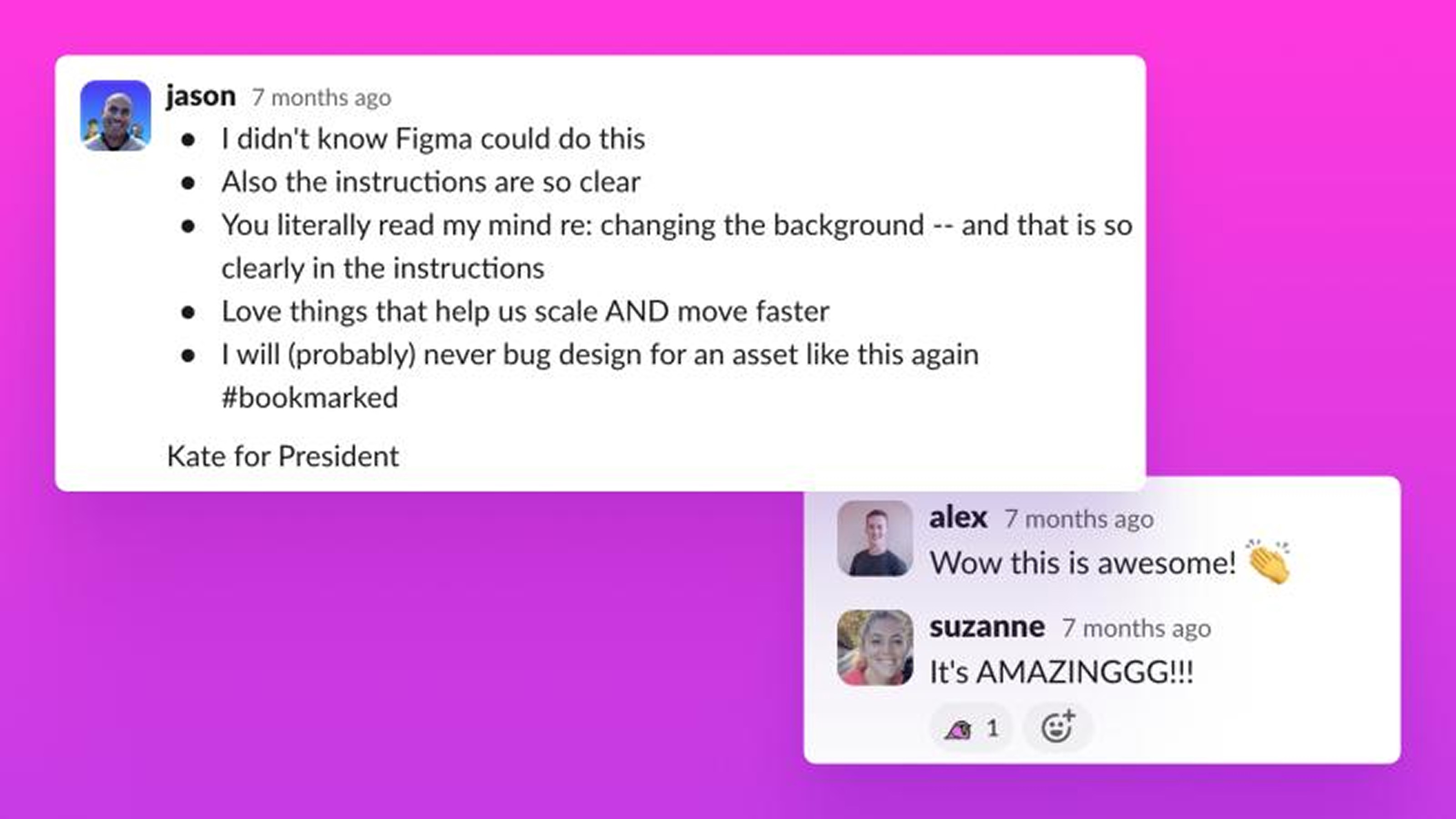
I decided to build my own tool: Asset Generator. This unlocked Marketing, generating dozens of on-brand variations in minutes rather than waiting days for designer availability.

Shipping velocity of on-brand social images increased significantly, allowing me to focus on strategic work instead.


Website migration

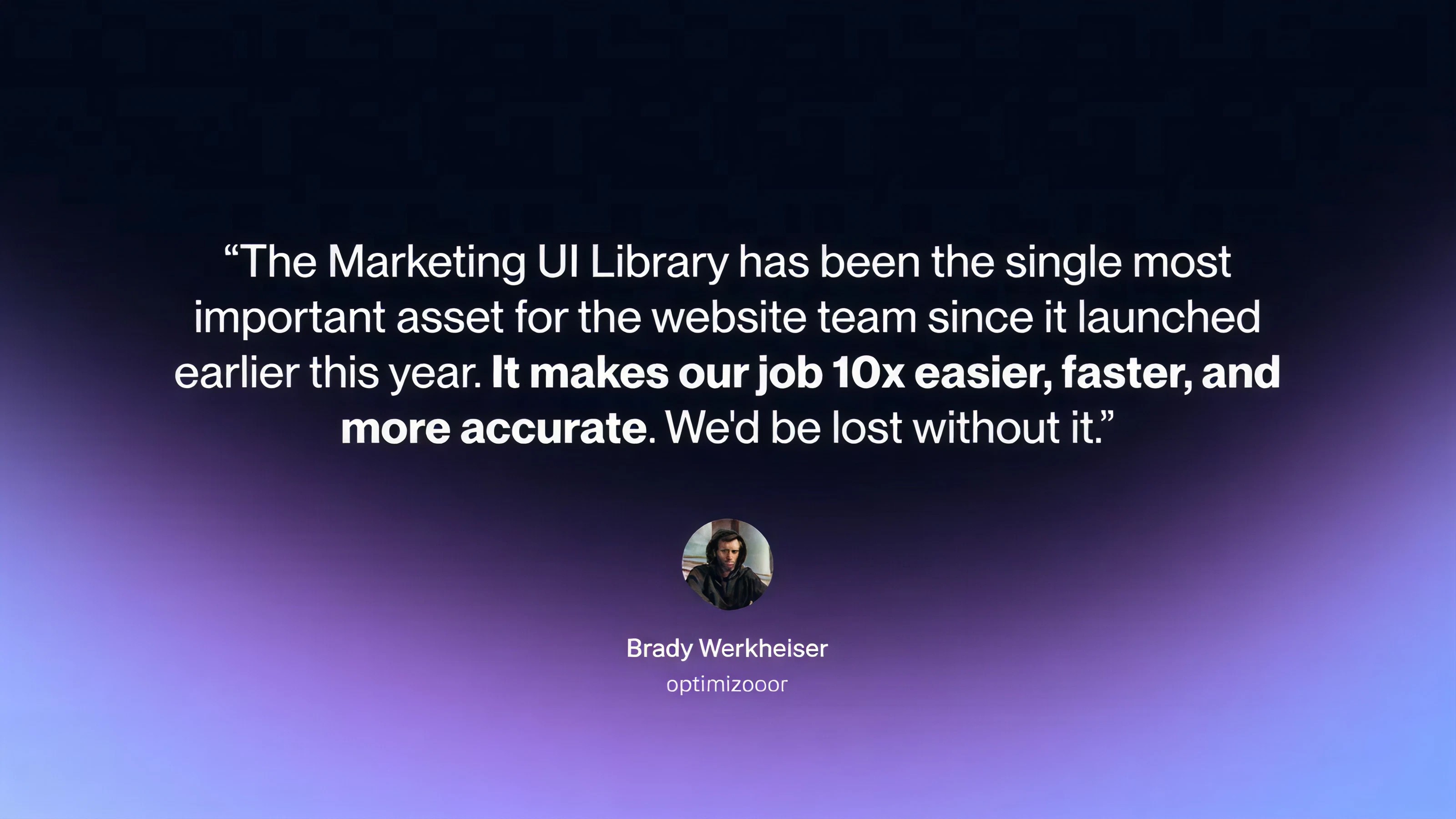
To address performance bottlenecks, I led a website migration with Brady Werkheiser that took us from Webflow to a headless CMS architecture, reducing site load times by 30% and giving the marketing team the ability to build pages on their own.

This would require me to 1) build a UI library, 2) redesign our entire website to use it, 3) train marketers on how to use the library and Dato CMS after launch.

The development agency we worked with (Monogram) said the UI library was the most thorough library they've ever worked with — and they've worked with Github and Vercel. Truly honored.

Brand hub

I built design.alchemy.com to serve as our central brand resource. No more hunting through desktop folders or wondering which logo version to use. Everything in one place, synced with Figma so it's always up to date.

Everything was perfectly in sync with Figma and we could easily embed Storybook components. Collaboration was seamless.

Account Kit

As the team grew, I stepped into a leadership role—owning brand design across major product launches.

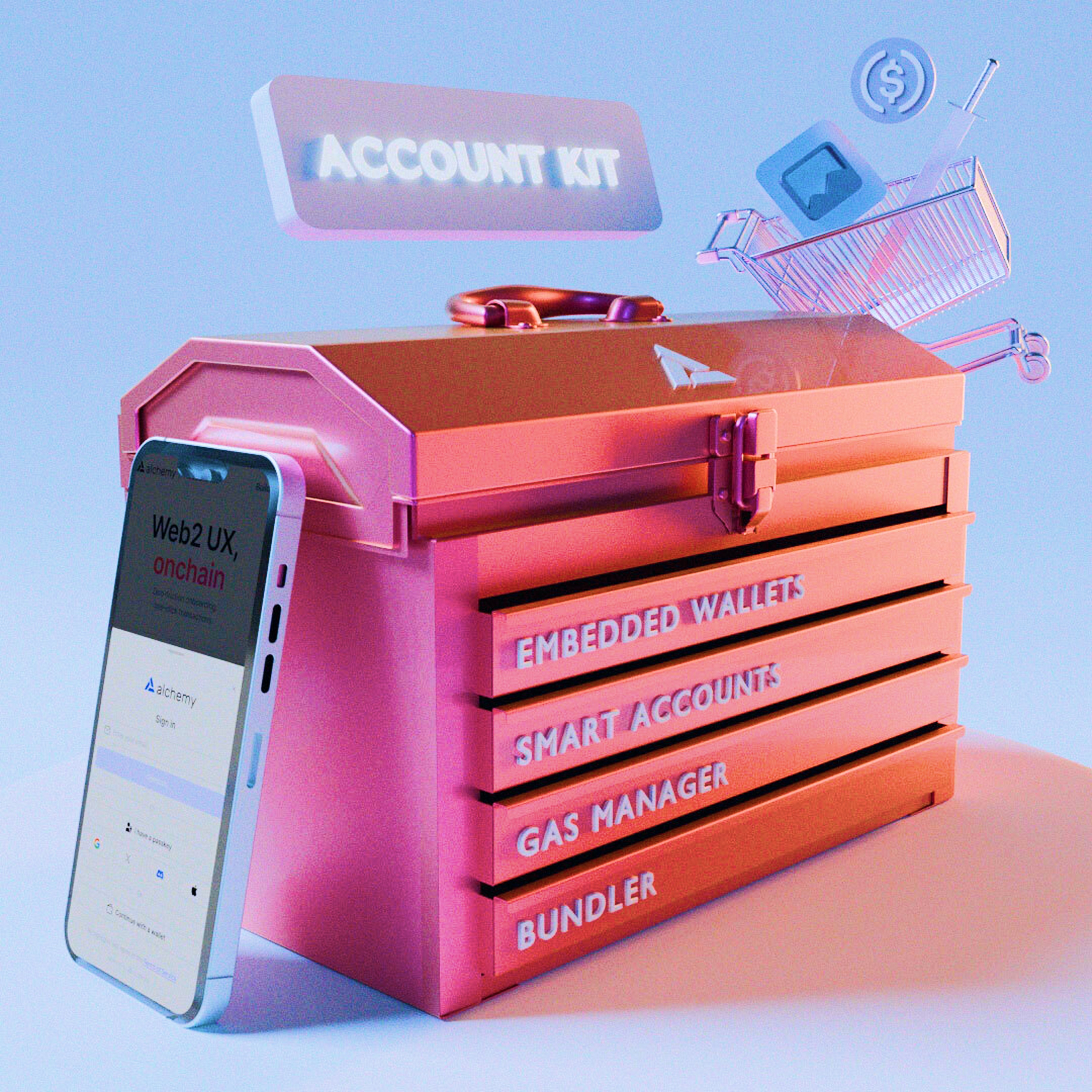
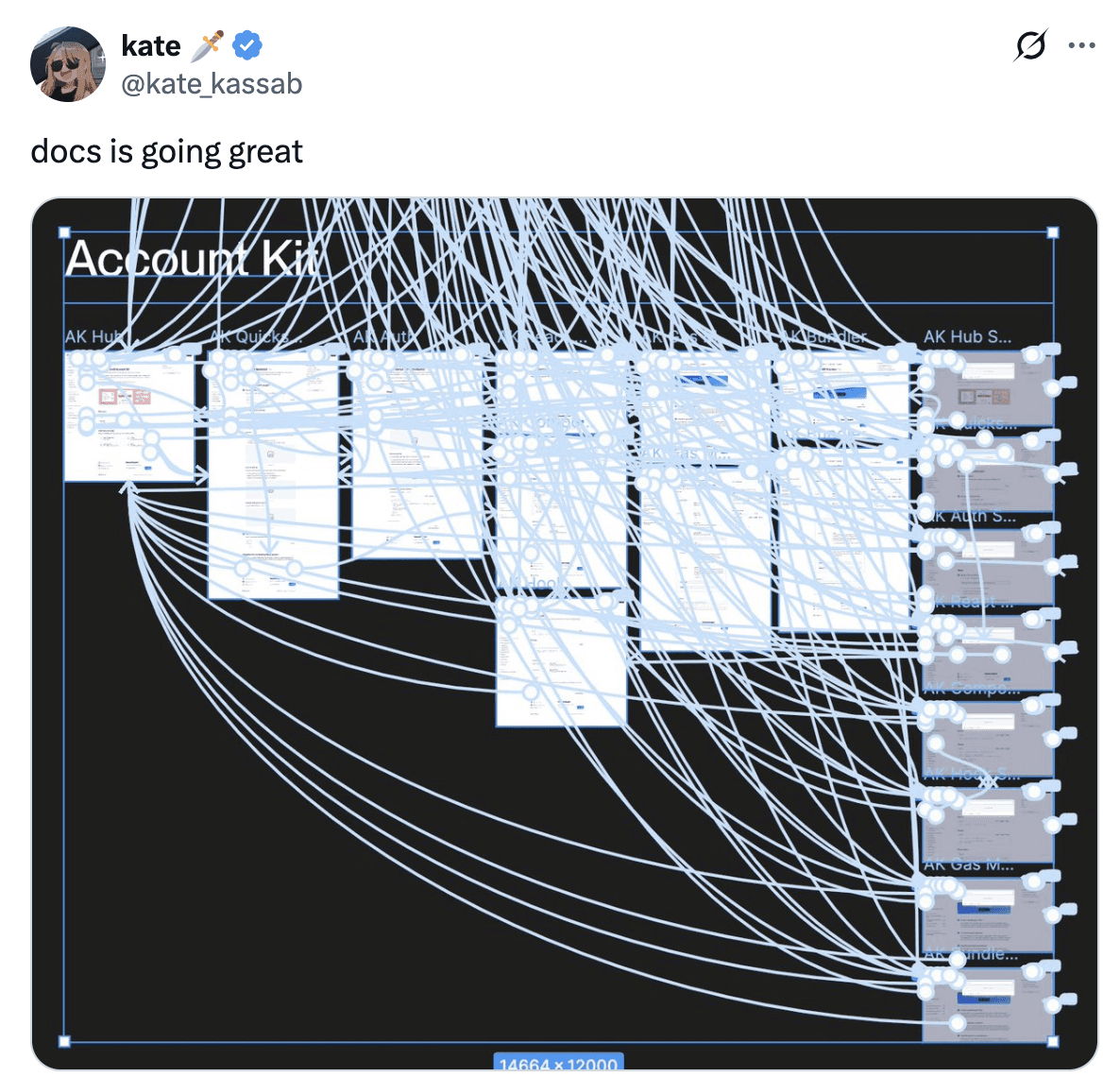
When we were gearing up to launch Account Kit, I had only a week and a half to 1) create a subbrand, 2) design and build its landing page, and 3) design the social assets for launch day. All solo.

This was (admittedly) one of my most stressful weeks at Alchemy. But the team came together and met the deadline.

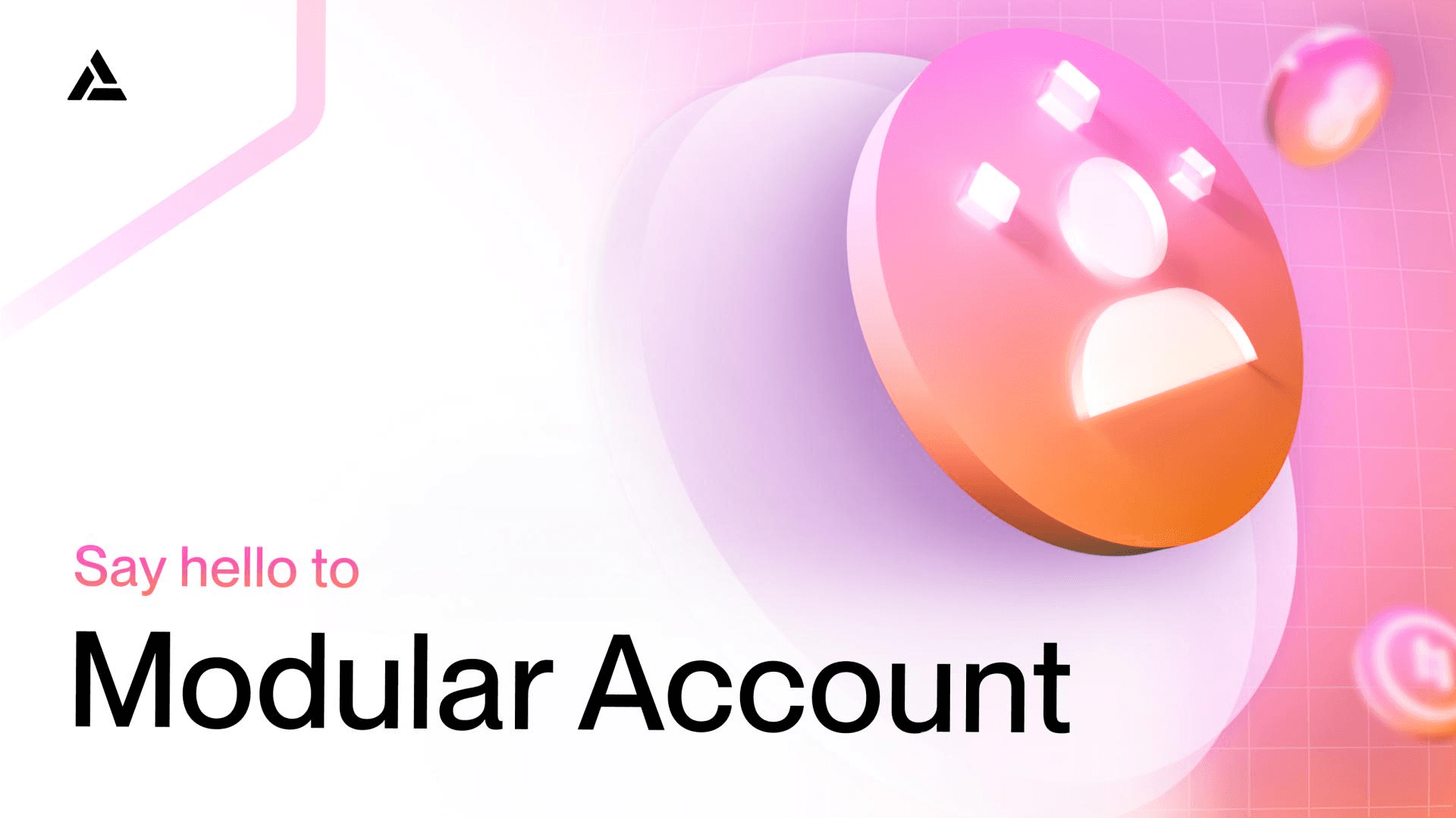
One of my favorite parts was designing our partnership social images for the Modular Account part of the launch. I made custom 3D graphics for each partner logo and composited them with our announcement. There were 12 in total.
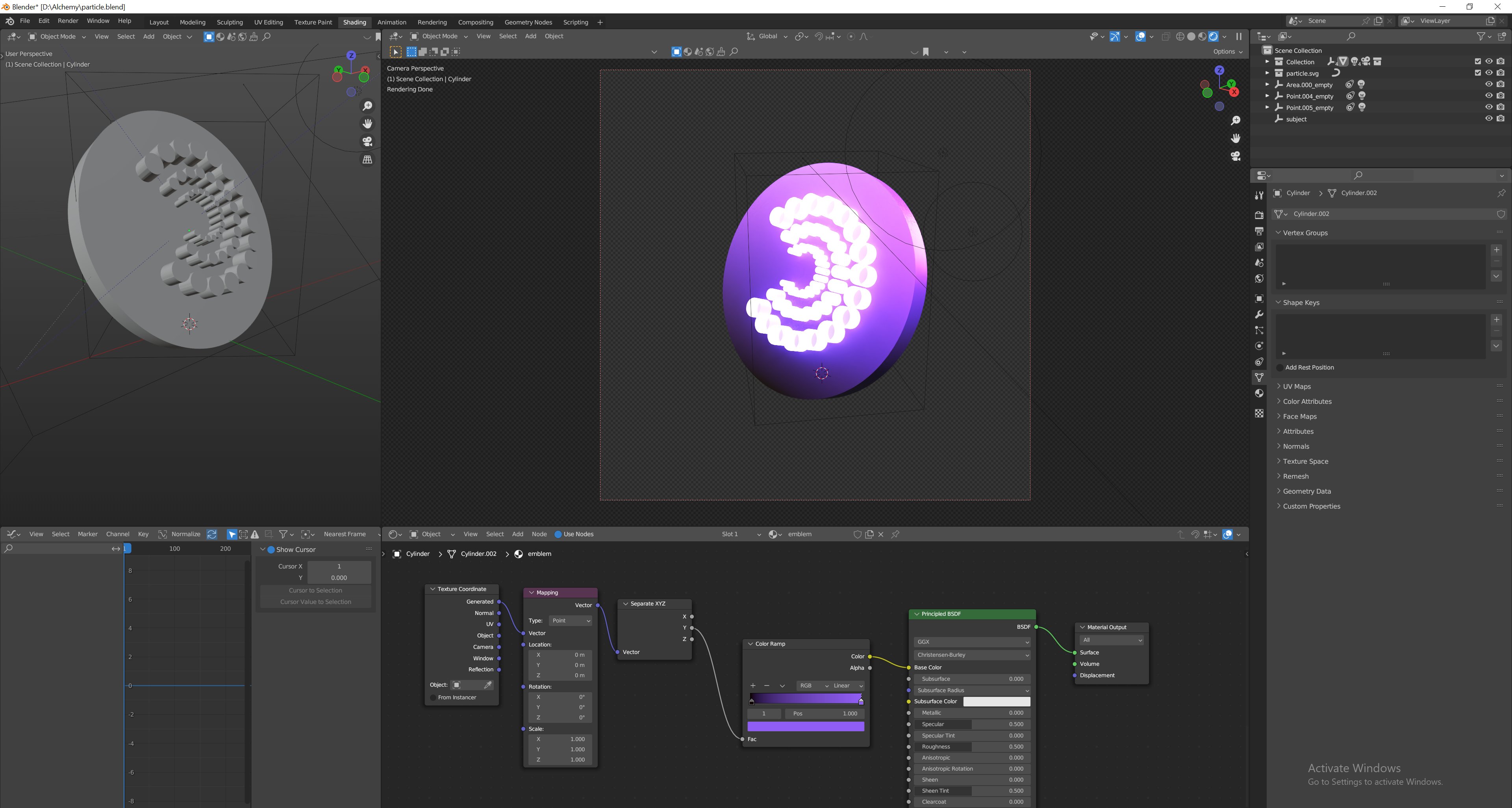
For our blog posts, I took care to make sure they were branded and information dense diagrams were easy to digest.

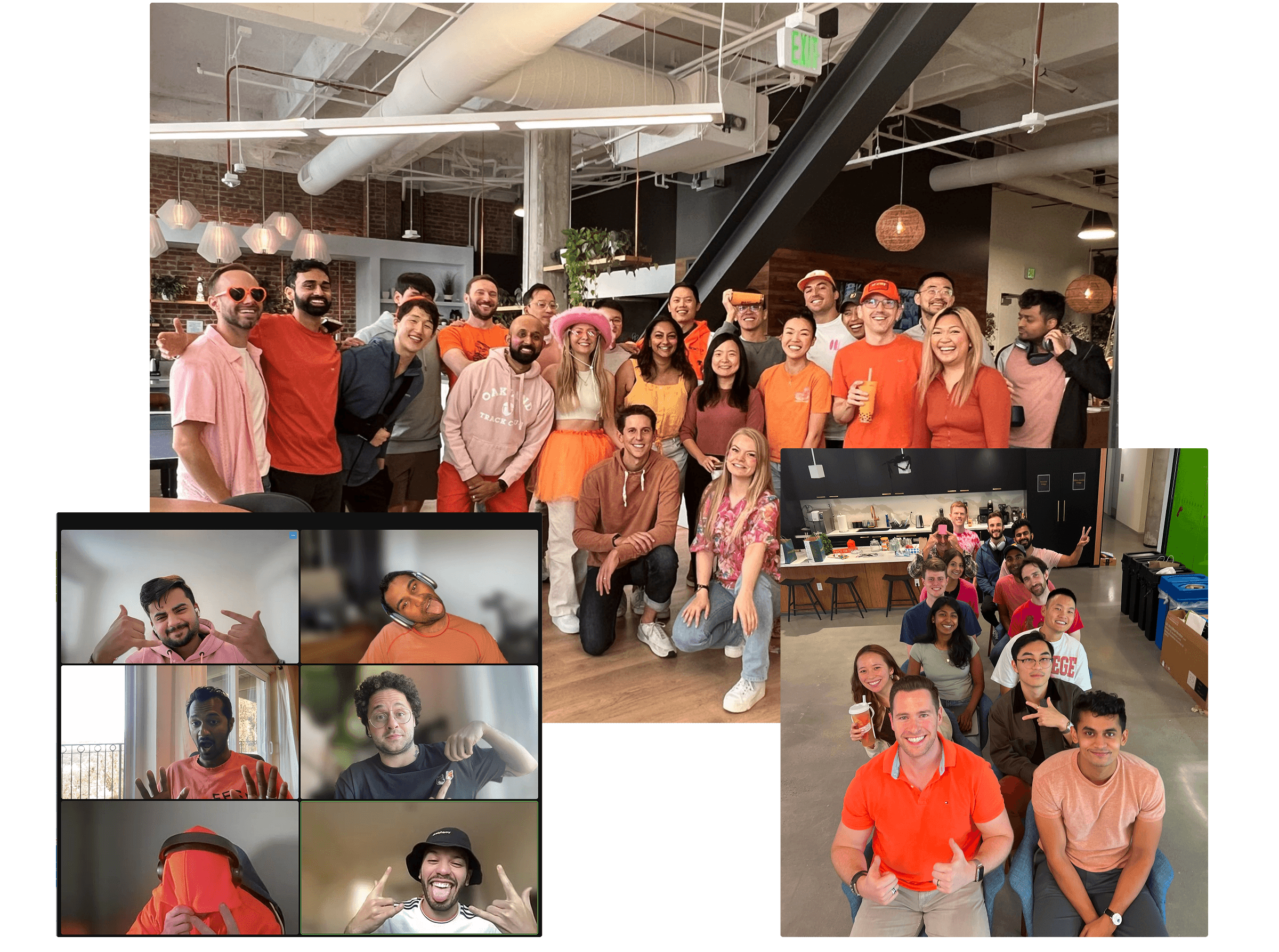
For launch day, I got the company (across both SF/NY offices and remote!) to dress in our new pink/orange colors. I think these types of initiatives really help the whole company feel connected to a new subbrand—especially for such an important product line.

Yes, I am the one in the pink cowboy hat and orange tutu. 😂

Docs redesign

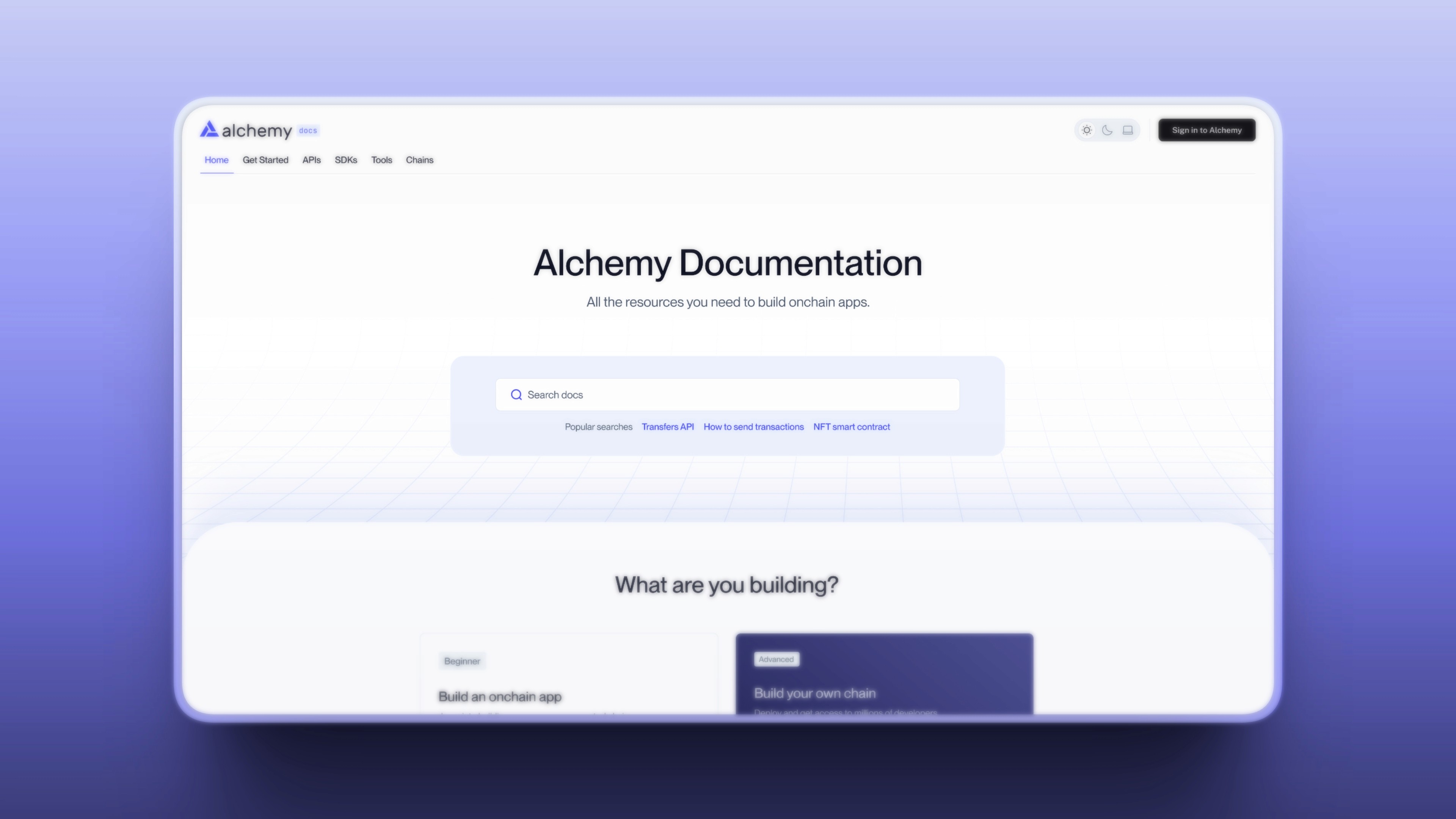
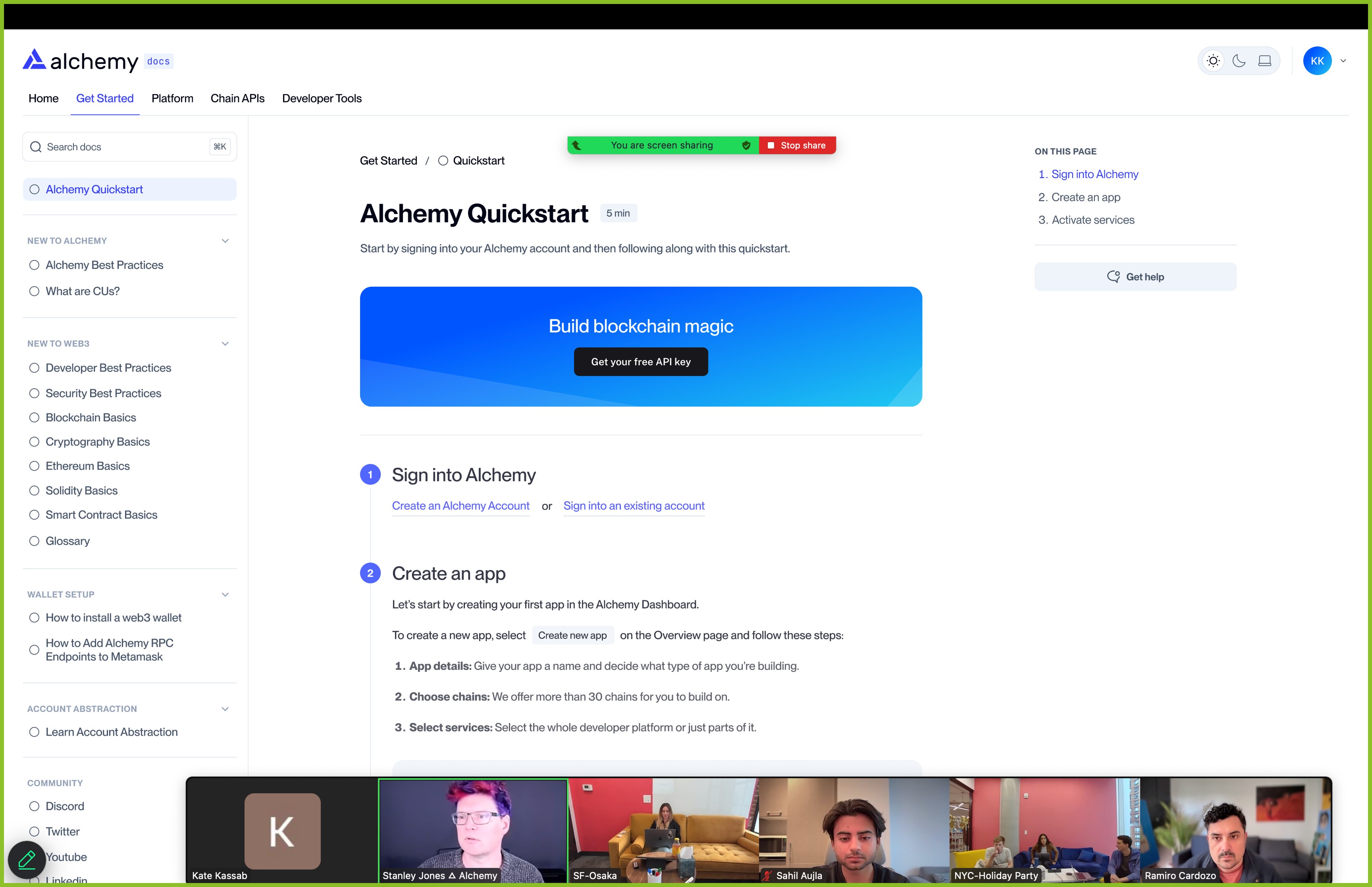
One of my last big projects at Alchemy was rebuilding our documentation site to better serve developers and drive adoption.

Our documentation was functional but outdated—it hadn't evolved alongside our product. Developers struggled with navigation, visual hierarchy was weak, and the design felt disconnected from our brand. Poor docs experience wasn't just an aesthetic problem; it was a barrier to product adoption.

The Challenge:

The existing docs site had several critical issues:

  • Navigation was overwhelming with no clear information hierarchy

  • Product info was not recent and visual styles did not match

  • Code examples were hard to scan and copy

  • Search functionality was inadequate for finding specific methods or use cases

  • Mobile experience was essentially broken

My Approach:

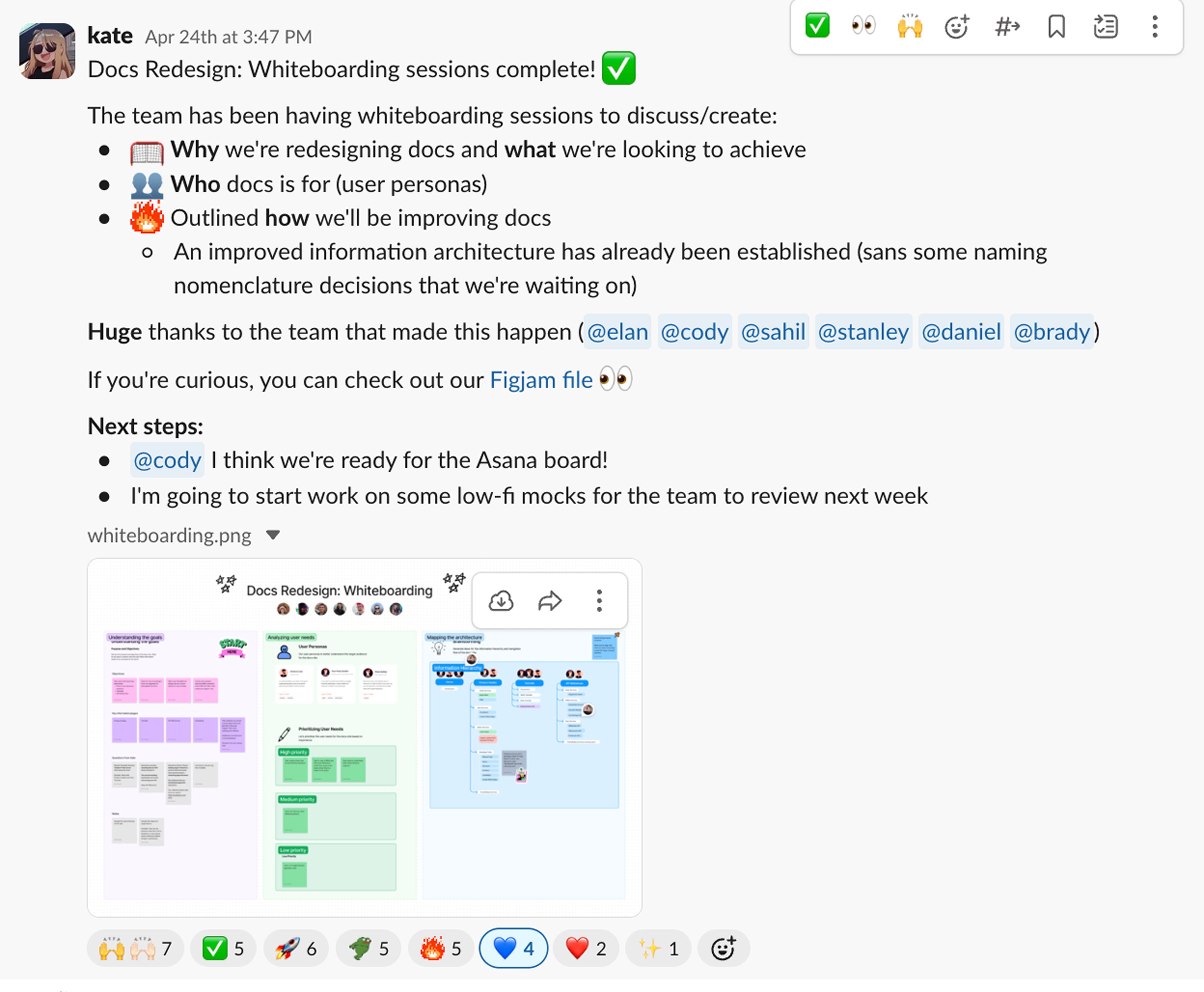
I started organizing a whiteboarding session for the working team to get a baseline of 1) where we're at and 2) where we're looking to improve.

I then interviewed developers (both internal and external) to understand their actual workflows. What were they trying to accomplish? Where did they get stuck?

Then I got to work on the improvements.


[ADD DOCS PROTOTYPE]

Navigation / Information architecture:

  • Restructured content into clear categories: Getting Started, API Reference, Guides, and SDKs

  • Created persistent left-nav with expandable sections

  • Added contextual "Related Resources" to help developers discover adjacent topics

  • Implemented breadcrumbs for wayfinding in deep documentation

Visual Design:

  • Elevated typography with better hierarchy and readability

  • Designed a code block system with syntax highlighting and one-click copy

  • Created interactive API explorers for key endpoints

  • Built reusable doc components (callouts, warnings, tabs for multi-language examples)

Developer-Focused Features:

  • Language-specific code examples (JavaScript, Python, TypeScript) with easy toggling

  • One-click copy buttons on every code block (seems obvious, but our old docs required manual selection)

  • Inline API response examples so developers could see what to expect before making calls

  • "Try it" interactive endpoints where developers could test API calls directly from docs

  • Clear error handling documentation with common failure modes and how to debug them

  • Keyboard shortcuts for power users (/ to search, arrow keys to navigate)

From there, I worked to get functional prototypes ready to get in front of customers. Then, the dev experience team took the prototypes and tested them with both Alchemy customers and devs in the space that don't use Alchemy.

We learned a lot of key information about how developers like to traverse docs via the sidebar navigation and iterated the most there.

Design decisions

I had to balance comprehensiveness with simplicity. We had 400+ pages of documentation showing everything at once would be overwhelming. I designed a progressive disclosure system: start with the most common paths, then reveal advanced options as needed. For code examples, I advocated for showing full, working snippets rather than fragments. This meant longer code blocks, but user research showed developers preferred copy-paste-run examples over having to piece together multiple snippets.

While I left shortly after launch, early signals were promising:

  • Positive developer feedback in user testing sessions

  • Developers reported finding what they needed faster

Collaboration

Working at Alchemy taught me that the best design work happens through collaboration, not isolation.

I learned to:

  • Build trust with engineering teams by respecting technical constraints and pairing on implementation

  • Advocate for users while understanding business priorities

  • Create systems that empower teams rather than create dependencies on designers

  • Move fast without sacrificing quality

  • Lead through influence rather than authority

These projects succeeded because I worked alongside talented people who challenged my thinking and made the work better (and, honestly, with the AlchemyFam… more fun.)

Kate has been more than a designer; she's been a force of creativity, collaboration, and inspiration. Whether shaping our brand, being a key member of the design team, pushing boundaries, or solving the trickiest design challenges, she's left a mark that will be felt for years to come.

Ramiro Cardozo

Head of Design, Alchemy

Kate has been more than a designer; she's been a force of creativity, collaboration, and inspiration. Whether shaping our brand, being a key member of the design team, pushing boundaries, or solving the trickiest design challenges, she's left a mark that will be felt for years to come.

Ramiro Cardozo

Head of Design, Alchemy

Kate is one of the most intuitive and creative designers I have ever worked with. She consistently takes in hard, technical, abstract topics and turns them around into elegant designs that our customers love. She goes above and beyond in not just generating designs, but suggesting new ideas that have always turned around rave reviews.

Noam Hurwitz

Head of Engineering, Alchemy

Kate is one of the most intuitive and creative designers I have ever worked with. She consistently takes in hard, technical, abstract topics and turns them around into elegant designs that our customers love. She goes above and beyond in not just generating designs, but suggesting new ideas that have always turned around rave reviews.

Noam Hurwitz

Head of Engineering, Alchemy

I had the pleasure of working with Kate for docs redesign at Alchemy. Not only she single handedly redesigned it, it's the best looking docs design I've ever seen!! She's a kind, amazing human being and incredibly fun to work with. You can see she's truly passionate about design and creation. She often explores new tools in the space, for example, she's been creating 3D characters of her friends and colleagues. I love her Blender side projects and updates on X. Anyone would be lucky to have her on their team!

Sahil Aujla

Sr. Dev Rel Engineer

I had the pleasure of working with Kate for docs redesign at Alchemy. Not only she single handedly redesigned it, it's the best looking docs design I've ever seen!! She's a kind, amazing human being and incredibly fun to work with. You can see she's truly passionate about design and creation. She often explores new tools in the space, for example, she's been creating 3D characters of her friends and colleagues. I love her Blender side projects and updates on X. Anyone would be lucky to have her on their team!

Sahil Aujla

Sr. Dev Rel Engineer

Jump to: